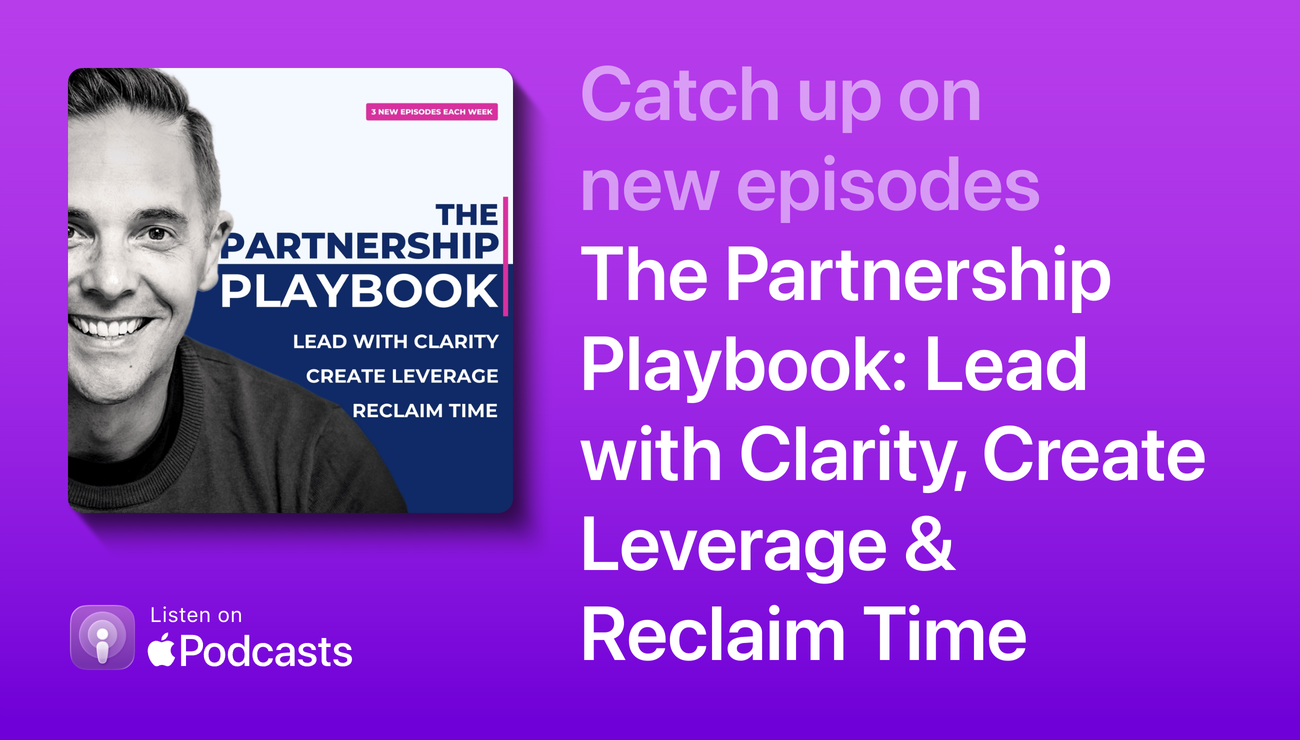
Pharmacists are reshaping patient care by stepping beyond the dispensary and into an expanded scope of practice that now includes vaccination, prescribing for minor ailments, and serving as the most accessible point of entry in the primary healthcare system.
In this episode, Phil Hayes-St Clair sits down with Michelle Lynch, CEO of Ramsay Pharmacy and Psychology, to explore how this shift is playing out on the ground and what it demands of the leaders driving it.
Michelle shares the career journey that took her from community pharmacy to the boardroom, why emotional intelligence is the most underrated leadership skill of 2026, how Ramsay maintains an extraordinary NPS of 87 across hundreds of care touch points and what most leaders get dangerously wrong about partnerships.
From Pharmacist to CEO: Michelle Lynch on Leading with Vulnerability, Purpose, and Partnerships in Healthcare
There's a version of leadership that still gets quietly celebrated in many organisations. It’s the armoured executive who walks in every day projecting certainty, keeps emotion firmly off the table, and measures success in margins.
Michelle Lynch, CEO of Ramsay Pharmacy and Psychology, is not that leader. And the results speak for themselves.
In a wide-ranging conversation on The Partnership Playbook, Michelle, who began her career as a practising pharmacist and has since spent over a decade leading one of Australia's most significant healthcare divisions, made a compelling case for a different kind of executive presence: One built on transparency, emotional intelligence, and the courage to be genuinely seen by your team.
The transition most leaders aren't prepared for
Michelle was direct about something that doesn't get discussed enough: the shift from being a highly skilled individual contributor to leading a large, dispersed team is one of the hardest transitions a professional can make. "There's sometimes an innate component within yourself that you don't know how to realise," she said. For Michelle, mentors were the bridge including a pharmacist named Mary she worked alongside as a 19-year-old student, whose generosity and values quietly shaped everything that followed.
The lesson here isn't unique to healthcare. It's a reminder that leadership capability rarely announces itself. It gets drawn out by the right people, at the right moments, over time.
Why "don't be emotional" is the worst advice in leadership
When asked about the worst piece of advice she'd ever received, Michelle didn't hesitate. "Don't be emotional." She disagrees with it vehemently, and not because she thinks leaders should be unhinged or inconsistent. Quite the opposite. For Michelle, showing vulnerability, sharing in the highs and lows of the team, and being honest about who you are builds the kind of trust that holds through difficult periods. It creates connection that no KPI or process manual can manufacture. "That is how I lead today," she said. "And I think it is part of the success of what we've achieved."
This sits at the heart of what Phil has observed first-hand working with Michelle's team: People who understand not just their own role, but why every other role exists. That kind of organisational coherence doesn't happen by accident. It's the downstream effect of a CEO who leads with openness, not armour.
Keeping teams connected to purpose under commercial pressure
Ramsay's core value — people caring for people — might sound like standard corporate language. Inside the business, it functions very differently. Michelle described a deliberate system of closing the feedback loop between customers and frontline staff: capturing NPS (currently averaging 87), feeding specific, named feedback back to individual team members, and creating regular forums to celebrate wins at every level of the organisation. When the person dispensing a prescription or supporting a psychology patient hears directly that they made someone feel heard and cared for, purpose stops being abstract. It becomes personal.
As Phil observed in the conversation, that challenge scales with the organisation - what looks like success in one corner of a multi-state, multi-site business may not register in another. Michelle's answer to this is visibility: town halls, site visits, open channels, and a direct line to her office for team members who need it. The gold, as she put it, comes from being physically present and genuinely curious.
The pharmacy profession's quiet revolution
One of the most illuminating threads of the conversation was Michelle's perspective on what community pharmacists actually do and how poorly understood it is, even within the healthcare sector.
She described the layered complexity behind what looks, to the patient, like a brief and simple interaction: a medication expert simultaneously holding disease states, drug interactions, social determinants of health, and individual patient nuance, and distilling all of it into clear, actionable guidance in real time.
"I think the simplicity in the way it's delivered sometimes undersells the complexity that goes on behind it," she said.
What's equally exciting is the scope of practice expansion now underway. Pharmacists can vaccinate. They can prescribe for minor ailments. And for a healthcare system under significant pressure (GPs burning out, regional communities underserved, access barriers multiplying) the community pharmacist may be one of the most powerful and under-utilised assets in primary care.
On partnerships: simplicity, shared values, and structural integrity
When the conversation shifted to partnerships, Michelle brought the same clarity she applies to everything else. Partnerships are not optional for organisations of ambition. But she offered two pointed observations on where leaders go wrong.
First, complexity. "I think we try to make them too complex," she said. Small, meaningful, clearly defined outcomes tend to outlast grand visions. The simpler the deliverable, the more likely it actually gets delivered.
Second, commercial pressure. When organisations are under financial strain (and most are right now) the temptation is to let commercial terms drive partnership decisions above all else. Michelle's view is that while the commercials must stack up, the flexibility of what those commercials look like matters enormously. Rigidity here is often what breaks partnerships before they find their rhythm.
Phil added a frame he's developed over two decades of building partnership-led businesses: every partnership needs at least two material incentives per party. When the market shifts (and it will), a single incentive thread snaps. Multiple incentives create resilience. They're also what survive leadership transitions because as Michelle rightly noted, partnerships built on individuals rather than infrastructure are always one resignation away from unravelling.
What great leadership looks like in 2026
Michelle closed with a reflection prompted by a recent talk from Matt Comyn, CEO of Commonwealth Bank about the centrality of physical and psychological health to how a leader shows up every day. It's a thread that ran through the whole conversation: the idea that leadership quality isn't just strategic or technical. It's personal.
It's about the work you do on yourself (your health, your values, your relationships) so that you can bring something worth following into the room.
Michelle's own answer when asked what she's most grateful for right now was her health. The ability to influence it, protect it, and use it to do the things that matter.
That's not a small thing. For any CEO trying to lead through disruption with their team still intact and their culture still humming - it might be the most important thing of all.
When you're ready, there are two ways I can help you:
1. CEO Coaching: For CEOs and soon-to-be CEOs who want to lead with clarity and grow their business without sacrificing what matters most. A tailored 12-session experience with three interconnected elements: scaling you as a leader, elevating how you lead others, and creating conditions for sustainable business growth.
2. Leadership Events: What if your leaders left the room thinking differently about ambition and their role in achieving it? I've worked with military special operations leaders and leadership teams at Cochlear and Lifeblood where poor leadership costs lives. Looking for real stories, frameworks and insights that shift how leaders think about ambition, create leverage and build teams worth following? Book me for your next conference, offsite, or leadership event.
Looking for something different? Send me an email.